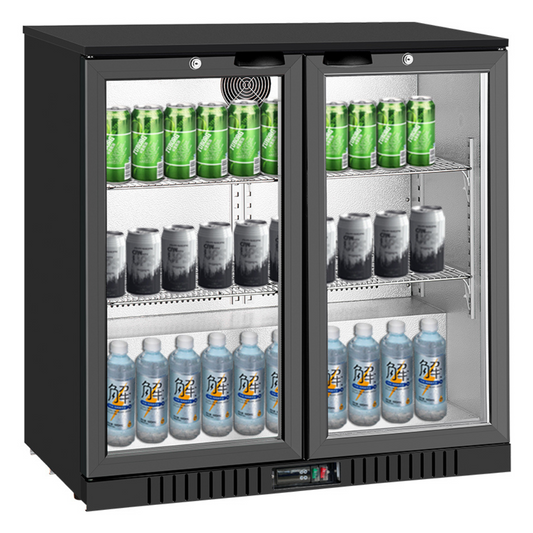
How to Choose the Right Bottle Fridge for Your Business 

Choosing the right commercial bottle cooler helps keep drinks chilled, organised and ready to serve, even during busy periods. Whether you run a pub, restaurant, café, hotel or convenience store, the right unit can make a real difference to your drinks service.

With different sizes, door styles and features available, it is important to choose a bottle cooler that suits your available space, stock levels and day-to-day requirements.

In this guide, we explain what to consider when buying a commercial bottle cooler so you can make an informed decision for your business.

 1. What Is a Commercial Bottle Cooler? 

A commercial bottle cooler is a refrigerated cabinet designed to store and chill bottled and canned drinks. Many models feature glass doors and internal lighting, making it easy to see your stock and present drinks attractively.

Bottle coolers are commonly used in:

  • Pubs and bars
  • Restaurants and cafés
  • Hotels and hospitality venues
  • Clubs and leisure facilities
  • Convenience stores and other retail environments

Depending on the model, a bottle cooler can sit beneath a counter, behind a bar or in a dedicated drinks display area.

 2. Choose the Right Size and Capacity 

Capacity is one of the most important factors when choosing a bottle cooler. You need enough space to keep up with demand without taking up more room than necessary.

Consider how many bottles and cans you expect to store, how quickly your stock sells and how frequently you can restock the cabinet.

Bottle capacity and litre capacity

Manufacturers may list a cooler's capacity in litres or provide an approximate number of standard bottles it can hold. Bottle capacity is useful when comparing models, but remember that larger bottles and different packaging shapes will affect the total number you can store.

As a general starting point:

  • Small cafés and limited bar areas: Consider a compact, single-door unit.
  • Busy cafés and smaller bars: A larger single-door or double-door model may be more suitable.
  • Pubs and restaurants: Consider a double-door or triple-door cooler where drinks demand is higher.
  • High-volume venues: A larger cabinet or multiple units may be needed to keep up with peak service.

These are starting points rather than fixed rules. Always compare the actual dimensions and stated bottle capacity of each model.

 3. Hinged or Sliding Doors? 

The door style can affect how easily staff access drinks, particularly in a busy bar where space behind the counter is limited.

  •  Hinged-door bottle coolers 

    Hinged doors open outwards, giving staff access to the cabinet. They can be a practical choice where there is sufficient clearance in front of the cooler.

    Consider a hinged-door model if:

    • Staff need convenient access to the cabinet.
    • There is enough room for doors to open fully.
    • You want to access the contents without sliding doors overlapping.
  •  Sliding-door bottle coolers 

    Sliding doors move sideways rather than opening outwards. This makes them useful in compact bar areas where space is limited.

    Consider a sliding-door model if:

    • Staff work in a narrow space behind the bar.
    • Open doors could obstruct movement.
    • You want convenient access without needing additional clearance in front.

    Sliding doors do require regular cleaning around their runners to help prevent dirt and spillages from affecting their movement.

Which should you choose? Consider your bar layout and how staff will use the cooler during service. Hinged doors offer full opening access, while sliding doors can help maximise working space.

 4. Glass Doors and Product Display 

Glass doors allow staff to identify stock quickly and help customers see the drinks available. Combined with internal LED lighting, they can also create an attractive display behind a bar or in a hospitality setting.

Glass-door bottle coolers are particularly useful when product visibility is important.

When comparing models, look for:

  • Clear glass for easy product visibility.
  • Internal LED lighting.
  • Adjustable shelves to accommodate different bottle and can sizes.
  • A layout that makes popular drinks easy to reach.

If presentation is less important than keeping stock out of sight, consider whether a solid-door refrigeration unit would better suit your needs.

 5. Temperature Control and Cooling 

Different drinks may be best served at different temperatures. When choosing a bottle cooler, check the manufacturer's stated operating temperature range and make sure it suits the products you intend to store.

Many commercial bottle coolers offer an adjustable temperature range, although the exact settings vary by model.

Useful features include:

  • Digital temperature control: Makes it easier to adjust and monitor the cabinet temperature.
  • Fan-assisted cooling: Helps distribute cold air around the cabinet.
  • Automatic defrost: Can reduce the need for manual defrosting, depending on the system.

Remember that a bottle cooler is generally designed to maintain chilled stock rather than rapidly cool large quantities of warm drinks. Where possible, load it with drinks that have already been chilled and avoid overfilling it, so air can circulate effectively.

 6. Check the Available Space and Ventilation 

Before ordering, measure the intended installation area carefully.

Check the cooler's:

  • External width, height and depth.
  • Door-opening clearance, where applicable.
  • Route through doorways and access points.
  • Required ventilation clearances.
  • Position in relation to heat sources and other equipment.

Commercial refrigeration equipment needs sufficient airflow to remove heat. Installing a cooler in a cramped or poorly ventilated area can affect its performance.

Always follow the manufacturer's installation instructions for ventilation and clearance requirements rather than assuming every model needs the same space.

 7. Energy Efficiency and Running Costs 

A bottle cooler may operate for long periods throughout the working week, so energy consumption is worth considering when comparing models.

Look at the manufacturer's energy consumption figures, where available, rather than comparing units based on purchase price alone.

Features and habits that can help support efficient operation include:

  • Keeping ventilation openings clear.
  • Cleaning the condenser in accordance with the manufacturer's instructions.
  • Checking door seals for damage.
  • Avoiding unnecessary door openings.
  • Keeping the cabinet appropriately stocked without blocking airflow.
  • Choosing a unit suited to the ambient temperature of its working environment.

Do not assume that switching a commercial bottle cooler off overnight will save energy overall. The effect depends on the equipment, its contents and operating conditions. Follow the manufacturer's guidance for the specific model.

 8. Which Features Should You Look For? 

The most useful features depend on how your business operates.

Adjustable shelves
Allow the interior to be arranged around different bottle and can sizes.

LED lighting
Helps illuminate the contents and improve product visibility.

Digital temperature display
Makes it easier to check the cabinet's displayed temperature.

Lockable doors
Can help protect stock when the premises are unattended.

Fan-assisted cooling
Helps distribute chilled air throughout the cabinet.

Self-closing doors
Available on some models and useful for reducing the time doors are left open.

Compare each product's specifications carefully, as features vary between models.

 9. Cleaning and Routine Maintenance 

Regular cleaning and maintenance help keep a commercial bottle cooler operating as intended.

Good practices include:

  • Cleaning shelves and interior surfaces regularly.
  • Removing spills promptly.
  • Keeping ventilation grilles and condenser areas clear, following the manufacturer's instructions.
  • Checking door seals and hinges or sliding-door runners.
  • Monitoring the displayed temperature.
  • Arranging professional servicing when required.

A clean, well-maintained cooler helps protect your stock and can reduce the risk of avoidable performance issues.

 10. Choosing a Bottle Cooler for Your Business 

The best bottle cooler depends on your service requirements and available space.

  • For Pubs and bars 

    Consider bottle capacity, quick access during busy periods, door style and visibility of popular drinks.

  • For Restaurants 

    Look for a capacity that suits your drinks menu and service levels, with adjustable shelving for different bottle sizes.

  • For Cafés and coffee shops 

    A compact unit may be appropriate where space is limited and demand is moderate.

  •  For hotels and hospitality venues 

    Consider stock capacity, presentation and how the cooler fits into the wider drinks service.

  •  For retail environments 

    Product visibility, shelf arrangement and easy stock replenishment may be particularly important.

Before making your decision, compare the external dimensions, bottle capacity, temperature range, cooling system and energy consumption of the models you are considering.

 Frequently Asked Questions 

What temperature should a commercial bottle cooler be set to?

The appropriate setting depends on the drinks being stored and the manufacturer's specified operating range. Check the product instructions and choose a temperature suitable for your stock.

What is the difference between a bottle cooler and an undercounter fridge?

A bottle cooler is designed primarily for chilled drinks, often with glass doors and shelving suited to bottles and cans. An undercounter fridge is a broader category of refrigeration equipment that may be designed for different types of food or ingredients.

Are sliding-door bottle coolers better than hinged-door models?

Neither is universally better. Sliding doors are useful where opening space is limited, while hinged doors provide full access when opened. Your layout and working routine should guide your choice.

How many bottles can a commercial bottle cooler hold?

Capacity varies by model, dimensions, shelving and bottle size. Check the manufacturer's stated bottle capacity and remember that larger bottles may reduce the number that can be stored.

Can a commercial bottle cooler be installed outdoors?

Do not assume a standard bottle cooler is suitable for outdoor use. Check the manufacturer's specified operating conditions and whether the model is approved for the intended environment.

How do I keep my bottle cooler running efficiently?

Maintain clear ventilation, clean the unit as instructed, check door seals, avoid overfilling and monitor temperatures. Routine maintenance can also help identify issues before they affect performance.

Find the Right Bottle Cooler with DS Refrigeration 

At DS Refrigeration, we supply commercial refrigeration equipment and bar equipment for businesses across Northern Ireland, Ireland and the wider UK.

Whether you need a compact bottle cooler for a café or a larger cabinet for a busy bar, compare our available models to find a unit that suits your space and requirements.

Explore our commercial bottle coolers online or contact our team for help choosing the right model.

Call DS Refrigeration on 028 3751 1425 or email sales@ds-refrigeration.co.uk.